 Contact Us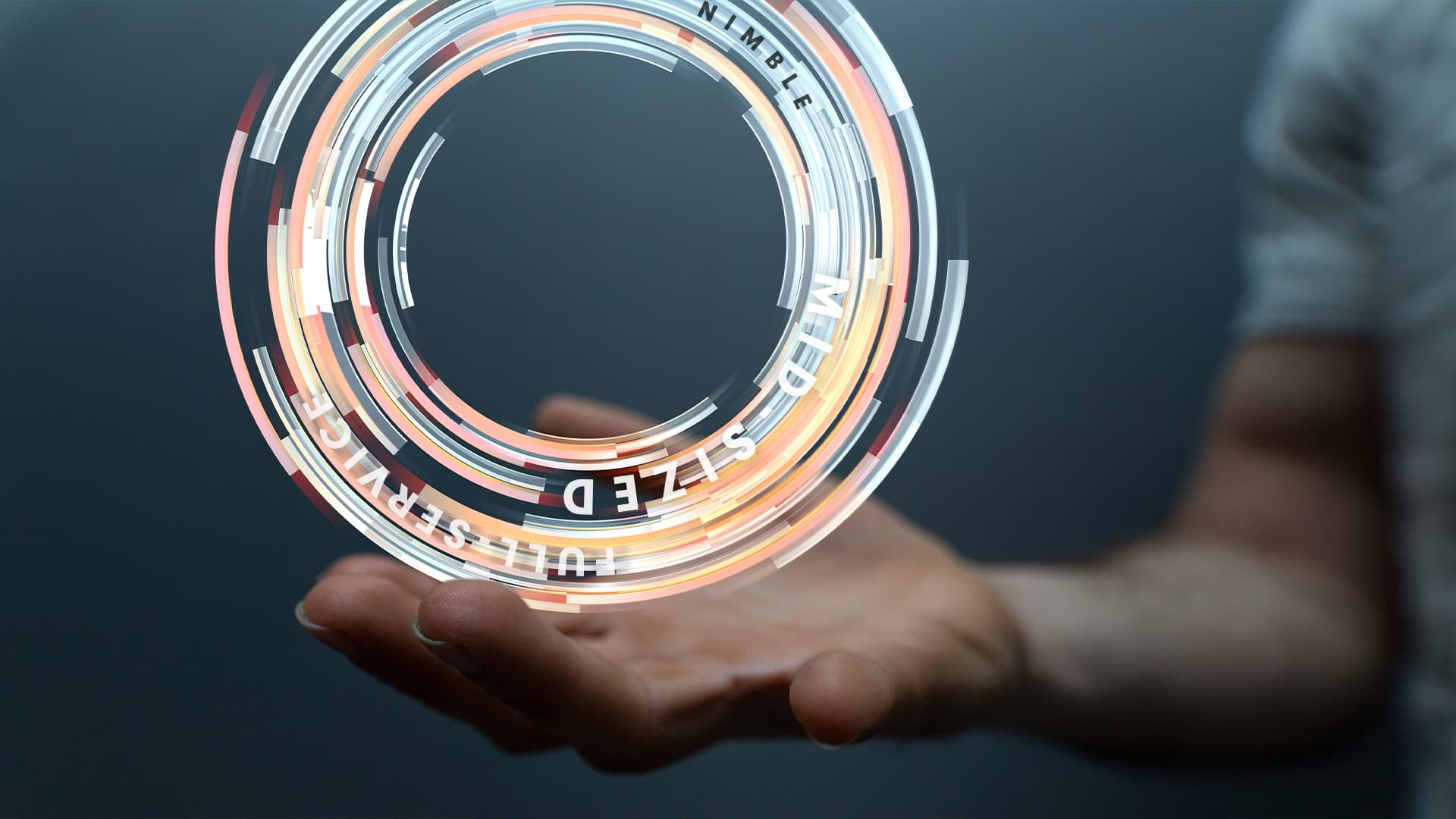
The New Agency Model

Everyone is talking about what’s happening, and no one knows the answer. The advertising industry and agency landscape are rapidly changing to a point where both are virtually unrecognizable, and no one knows how it going to all shake out. Since the advent of digital, we never know when the next seismic shift is going to come. These days, they’re coming faster and faster.
It’s 2026. The lionized big agencies have been snatched-up, watered-down and now “Retired” by profit-driven holding companies (Omnicom recently retired legendary agencies like DDB, FCB and Mullen). Once successful traditional shops that did not adapt to digital (or social, or content) and have become obsolete. Consultancies decided to get involved in the advertising business, but their model and mindset proved problematic. Advertisers began building in-house agencies to save money, but as a result, they limited their talent pool and outside perspective. And now AI is threatening to make us all obsolete.
So, given all of this, what does the New Agency Model look like? No one has a crystal ball, but status quo is not the answer.
I have worked in Boston advertising for over 30 years and have had a front row seat to a lot of that change. I cut my teeth on digital at Arnold/Circle, built a digital team inside a traditional agency at Hill Holliday, and experienced two very different approaches to world-class digital at Digitas and Barbarian Group.
One thing I’ve learned is that you need to be masters of your craft (table stakes), but you also need to be nimble and be able to adapt to the rapidly changing landscape.
Twenty years ago, a client had to rely on a big agency to do all the things they could not do themselves: Concept, shoot and edit a TV commercial, buy media, build a website. But with the proliferation of technology, it became easier for anyone to do these tasks. Today we are all carrying around a device in our pockets that can shoot, edit, and post media in minutes. Basic websites can be built on Squarespace. Media can be purchased on Google. And AI is threatening to change the landscape wholesale, giving anyone the ability to whip up a logo, social content or video (but that’s another article).
Truth is, advertisers still need a sophisticated marketing partner that can define a unique, compelling strategy, address their myriads of marketing needs, and create world-class work - all working within their tighter budgets and timeframes as shareholders squeeze them for higher profits.
Sure, AI can whip up a logo, a recent graduate can take over your social channels, and you can quickly/cheaply spin a rudimentary website. But as the ability to create becomes democratized, the ability to deliver the unexpected becomes an important litmus test for agencies and brands alike.
Getting something done quickly and cost-efficiently doesn’t typically mean getting it done right. Most times, it moves the work to the middle of the road and gives brands little chance of standing out in a content sphere that’s getting wider every day.
So how is a CMO supposed to create compelling, revenue-driving marketing, across all channels, on razor thin budgets? And what types of agencies are still surviving in today’s world that can help them get the job done on time, on budget and on strategy?
Our advice to marketers is identify a nimble, independent agency partner that has the capabilities to serve your short-term needs and evolve with you as your needs grow. Agencies offer value when they become a partner who understands the cultural moment and can use it to their clients’ advantage, whether it's through traditional or non-traditional tactics. It's not just evolving with their needs. It's evolving with the changes in how people interact with brands. Constant improvement. And a refusal to say "this is the way we've always done it" because what works today might not work tomorrow.
Given the changes we highlighted above, the big agencies have been reduced from 1,000 people to a few dozen (or disappeared altogether). And the talent from those agencies has landed in the smaller, independently held boutique shops.
Fuseideas provides a full-service offering (strategy, creative, content, social, media, digital and experiential) along with the big-agency talent that can meet all our clients marketing needs, while adapting to their tighter budgets and turnaround times.
But being successful today is also all about constant evolution. We see it on TikTok: the relevance of trends fades fast, and culture moves in an instant. We’re able to move quickly and adapt to the changes, but we also look to anticipate, or even create that change to stay ahead of the game. We’re no longer dealing with unlimited budgets for TV commercials, and long lead times mean something that seemed great during production may fall flat three months later.
We’ve embraced new technologies and efficient production techniques across all our disciplines (including research digital, creative and media planning) to work smarter and more efficiently for our clients. We listen to the world around us and move fast, so our audiences can create more meaningful connections with the brands we serve.
At Fuseideas, we’re looking ahead to the new agency model: one that’s proactive instead of reactive and equipped to live at the speed of our culture. Our brand is built around our ethos as Agents of Change—so we’re ready to navigate this new, turn-on-a-dime landscape. And whatever new landscape comes next.